
NO-DIG DRAIN RELINING · TONBRIDGE · KENT
No-Dig Drain Relining and Resin Patch Repairs
Structural repair carried out from inside the existing pipe, so drives, patios, lawns and floors stay where they are. Full and sectional relining for longer lengths, resin patch repairs for a single localised defect.
CHAS Accredited Contractor · SafeContractor Approved · Checkatrade member · DBS-checked engineers · £5 million public liability insurance · 12-month workmanship guarantee
What this service covers
No-dig repair means fixing a damaged drain from inside it, working through an existing inspection chamber rather than excavating down to the pipe. A resin-impregnated liner is positioned against the damaged section and cured in place, forming a new sealed surface within the old pipe.
The appeal is obvious on a property where the drain runs under a block-paved driveway, a patio, a mature lawn or a ground-floor extension. The repair happens without any of that being lifted.
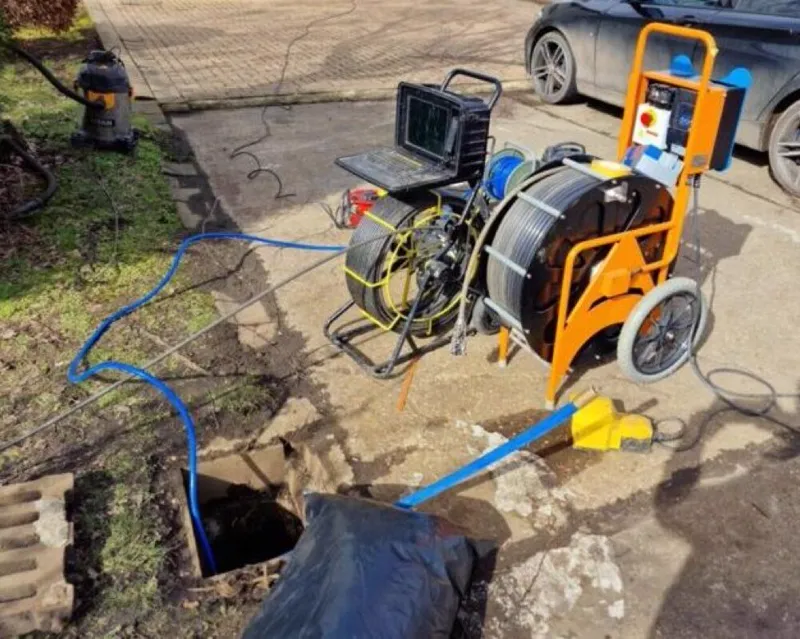
Relining and patching are not the same thing
These two get used interchangeably, and they should not be. Knowing which one you are being quoted for tells you a lot about whether the quote is right.
- Full or sectional relining. A liner is installed along a whole run or a substantial length of it, creating a continuous new surface inside the existing pipe. This suits pipework with several defects along its length, general deterioration, or a long stretch of ageing clay where patching each fault individually would make no sense.
- Resin patch repair. A short liner is positioned over one specific defect, typically a single cracked section or an open or displaced joint, and cured across that point only. This suits an otherwise sound pipe with one clearly identified problem.
A patch is the right answer for a single defect in a sound pipe. It is the wrong answer for a run that is failing in five places, and lining a whole run to fix one cracked joint is money you did not need to spend. The survey is what settles it.
Defects suited to no-dig repair
- Cracked and fractured pipe sections where the pipe still holds its shape
- Open, leaking or lightly displaced joints
- Root ingress through a joint, once the roots have been cut back
- Localised damage in an otherwise sound run
- General deterioration along an older clay run
- Sealing a run to stop water escaping into the surrounding ground
How the work is carried out
- CCTV survey. The defect is located and measured, and its position along the run recorded. Nothing is ordered or quoted structurally without this.
- Clean and prepare. The run is jetted and, where needed, roots are cut back. Resin will not bond to a pipe wall coated in fat, silt or scale, so preparation is not optional.
- Liner prepared. The liner is cut to the length required and impregnated with resin on site, which starts the curing clock.
- Positioned. The liner is drawn into the run and inflated against the pipe wall so it sits directly over the defect.
- Cured. The resin hardens in place, forming a new sealed surface inside the existing pipe. Curing time varies with the product and the conditions on the day.
- Post-installation inspection. The packer is removed and the finished repair is filmed, so you can see it rather than take our word for it.
- Flow test. Water is run through the system before we leave.
Why people choose no-dig
- No excavation, so driveways, patios, lawns and floors stay intact
- No reinstatement to make good afterwards, and no surface-matching problem
- Most jobs completed in a single visit rather than across several days
- Considerably less disruption where the drain runs under a structure or a mature garden
- A sealed pipe surface that stops water escaping and stops roots re-entering through the repaired defect
When no-dig is not the answer
Lining works by bonding to the existing pipe. Where there is no sound pipe left to bond to, it cannot work, and any contractor telling you otherwise is selling you a repair that will fail.
- Full collapse. There is nothing to line. The section needs excavating and replacing.
- Severe deformation. Badly deformed pitch fibre or crushed pipework does not provide a usable profile for a liner.
- Lost alignment. Where sections have dropped or moved significantly out of line, lining preserves the misalignment rather than correcting it, so the drain keeps catching debris.
- Heavily reduced bore. A liner takes up a small amount of internal diameter. On an already undersized or heavily restricted pipe that can matter.
- No usable access. The repair is installed through an existing chamber. Where there is no access point within reach of the defect, one has to be created, which means excavation anyway.
Access and site conditions
We need vehicle access reasonably close to the chamber, room to lay out and prepare the liner, and the drain out of use while the resin cures. That last point is the one worth planning for: nothing should be discharged into the run during curing, so on a domestic property that means not using the toilets, sinks, bath, shower, washing machine or dishwasher for the period we specify on the day.
Temperature affects curing. Cold conditions extend it, and we will tell you on the day what the realistic timescale is rather than quoting a figure from a brochure.
A note on lifespan and cost claims
You will see confident numbers quoted elsewhere for how long a liner lasts and how much it saves against excavation. We are not going to put a figure on this page that we cannot stand behind, because the honest answer depends on the specific product installed, the condition of the host pipe, and the ground it sits in.
What we will do is tell you which product we are proposing to install on your drain and what its manufacturer states about it, so you can make the comparison yourself against a quote for excavation.
What you are left with
- A sealed repair over the identified defect, installed without excavation
- Post-installation camera footage of the finished repair
- A flow test before we leave
- Details of the product installed and what the manufacturer says about it
- 12-month workmanship guarantee on the work carried out
Areas we cover
We work across Tonbridge and West Kent. Our busiest areas are Tonbridge, Royal Tunbridge Wells, Sevenoaks, Maidstone and Paddock Wood. The full list is on the areas we cover page. If you are not sure whether you are inside the service area, call and ask.
Frequently asked questions
Ask for a free quote
Tell us what is happening and we will come back to you with an honest assessment and a no-obligation quote. If it is urgent, please call rather than use the form.
Call Tom on 07572 433507
Office: Monday to Friday, 8am to 6pm. Out-of-hours emergency callback available.
Need No-Dig Drain Relining and Resin Patch Repairs in West Kent?
Call Tom directly on 07572 433507 for a free no-obligation quote. CHAS and SafeContractor approved, with a 12-month workmanship guarantee on every job.