
CCTV DRAIN SURVEYS · TONBRIDGE · KENT
CCTV Drain Surveys in Tonbridge and West Kent
Camera inspection of underground pipework to find out what is actually wrong before anyone starts digging or jetting. Diagnostic surveys, repeat-blockage investigations and pre-purchase surveys across West Kent.
CHAS Accredited Contractor · SafeContractor Approved · Checkatrade member · DBS-checked engineers · £5 million public liability insurance · 12-month workmanship guarantee
What this service covers
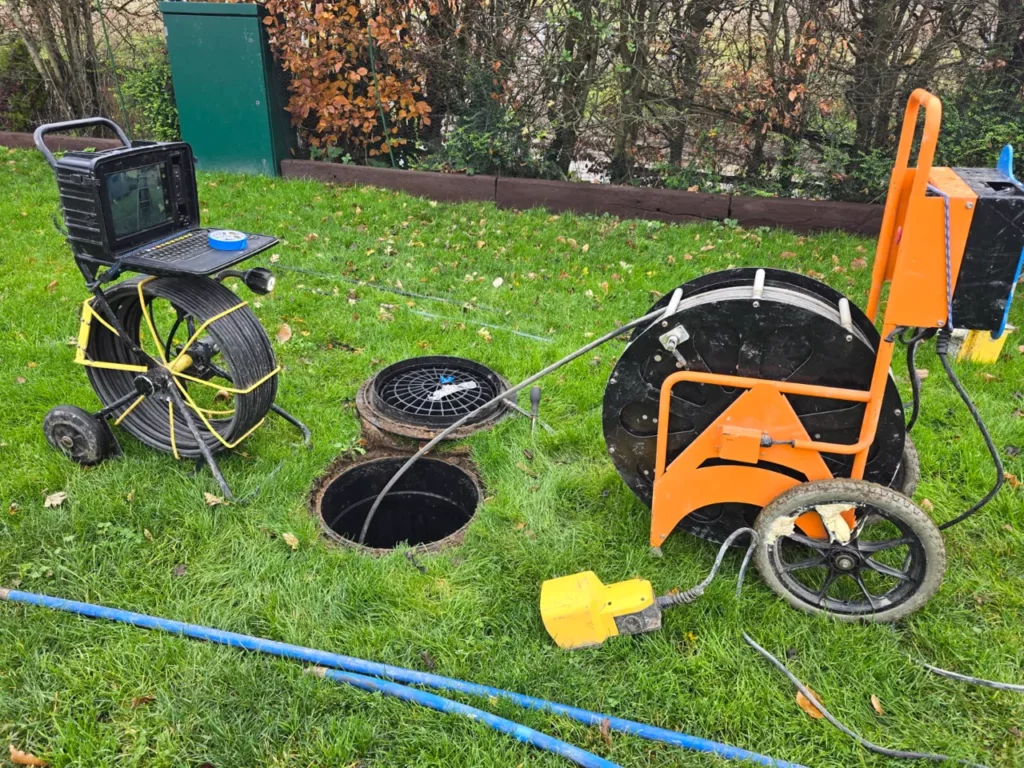
A CCTV drain survey puts a camera inside the pipe so the condition of the drain can be seen rather than guessed at. It is the difference between clearing the same blockage three times in a year and finding the fractured joint that keeps causing it.
We carry out surveys for three main reasons: to diagnose a recurring or unexplained drainage problem, to inspect drainage before someone buys a property, and to confirm exactly what a repair needs to involve before we quote for it.
Surveying first is not an upsell. Jetting a collapsed pipe does not fix it, and excavating the wrong section is expensive. Seeing the defect, its position and its severity means the recommendation that follows is based on evidence.
When a survey is worth doing
- Blockages that keep returning to the same drain run
- Slow drainage with no obvious cause after clearance
- Buying a property, particularly an older home with clay or pitch fibre pipework
- Suspected root ingress where trees or large shrubs sit near a drain run
- Cracking, sinking or subsidence in a driveway, path or garden above a drain
- Damp or foul smells with no visible source
- Before any planned drainage repair, to confirm the scope of work
- Landlord, commercial or portfolio due diligence
What the survey covers
- Inspection of accessible foul and surface-water runs from available chambers
- Identification of blockages, fat and scale build-up, silt, root ingress, cracks, fractures, displaced and open joints, and collapsed or deformed sections
- Recorded footage of the inspection
- A written report where one has been included in your quote, setting out what was found, where, and how serious it is
- A plain-English explanation of the options, including doing nothing where that is reasonable
- A quote for any remedial work, with no obligation to proceed
How a survey runs
- Scope agreed first. We confirm what you need, whether that is a quick diagnostic look at one run or a full inspection with a written report, and quote for it before attending.
- Access. We locate and lift the inspection chambers. Chambers under decking, inside a locked outbuilding, or beneath a parked car cannot be surveyed, so it is worth checking beforehand.
- Pre-clean where required. A pipe full of silt or standing water cannot be filmed usefully. Where the run needs jetting before the camera can see anything, we will tell you and price it separately rather than surprise you on the invoice.
- Inspection. The camera travels the run recording as it goes, with defects noted against their position along the pipe.
- Review with you. Where you are on site we will show you the footage and talk through what it shows.
- Report and recommendation. You receive the footage and, where included, the written report, along with any quote for remedial work.
What a survey can and cannot tell you
A camera can only see what it can reach. It is worth being clear about that up front:
- Standing water hides defects. Where a run is holding water, the camera cannot see the pipe wall below the water line. The run may need jetting or pumping down first.
- A hard blockage stops the camera. If the obstruction cannot be passed, the survey covers the pipe up to that point only, and we will say so rather than imply the rest is sound.
- A collapse ends the run. Where the pipe has collapsed, that is the end of what can be inspected from that direction.
- No chamber, no access. Runs with no available access point cannot be surveyed without creating one.
- Depth and routing are estimates unless traced. Where you need a drainage layout plotted rather than just inspected, say so at the quoting stage so the right work is priced in.
Pre-purchase and homebuyer surveys
A standard homebuyer or building survey does not inspect underground drainage. On period property across Tonbridge, Tunbridge Wells and Sevenoaks, that matters, because clay drainage laid a century ago is still in service under a great many Kent homes and is exactly where root ingress and failed joints show up.
A pre-purchase drainage survey tells you the condition of the drains before you are committed. Where you need the report in a particular format for a conveyancer, a lender or an insurer, tell us at the quoting stage. Reporting requirements vary, and we would rather confirm what is needed than hand you a report that does not meet it.
What happens when a defect is found
Finding a defect does not automatically mean a repair. Minor cracking or a small amount of scale in an otherwise sound pipe is often best monitored rather than dug up. Where remedial work is warranted, the survey determines which option is appropriate: jetting for build-up and roots in sound pipework, a resin patch or full liner for cracks and displaced joints, or excavation and replacement where the pipe has collapsed or lost alignment.
Areas we cover
We work across Tonbridge and West Kent. Our busiest areas are Tonbridge, Royal Tunbridge Wells, Sevenoaks, Maidstone and Paddock Wood. The full list is on the areas we cover page. If you are not sure whether you are inside the service area, call and ask.
Frequently asked questions
Ask for a free quote
Tell us what is happening and we will come back to you with an honest assessment and a no-obligation quote. If it is urgent, please call rather than use the form.
Call Tom on 07572 433507
Office: Monday to Friday, 8am to 6pm. Out-of-hours emergency callback available.
Need CCTV Drain Surveys in West Kent?
Call Tom directly on 07572 433507 for a free no-obligation quote. CHAS and SafeContractor approved, with a 12-month workmanship guarantee on every job.